
Topic overview
Stress is the body's natural response to demand or change. In VET settings, learners often face overlapping pressures — language, workplace adaptation, exams, family responsibilities — that can push the nervous system into chronic overload. This section helps professionals notice early signs and respond with calm, evidence-based tools.
Information for VET professionals
- Understand the physiological and emotional markers of acute and chronic stress.
- Adapt teaching pace, breaks, and feedback when a learner shows overload.
- Use trauma-aware communication to reduce shame around emotional reactions.
- Refer to local mental health support when stress becomes persistent.
Practical recommendations
- Open sessions with a 2-minute grounding exercise.
- Normalise short breaks — every 45–60 minutes.
- Reduce simultaneous cognitive load (one instruction at a time).
- Offer choice in how learners participate (speak, write, draw).
Activities and exercises
Box breathing
5 minInhale 4 – hold 4 – exhale 4 – hold 4. Repeat for 2 minutes as a group reset.
Body scan check-in
10 minGuided attention from head to feet noticing tension without judgment.
Worry parking lot
15 minLearners write down current worries on cards and 'park' them in a closed box for the lesson.
Resources
Stress Management Techniques — illustrated brochure
Colourful printable brochure with practical stress management techniques for learners and educators.
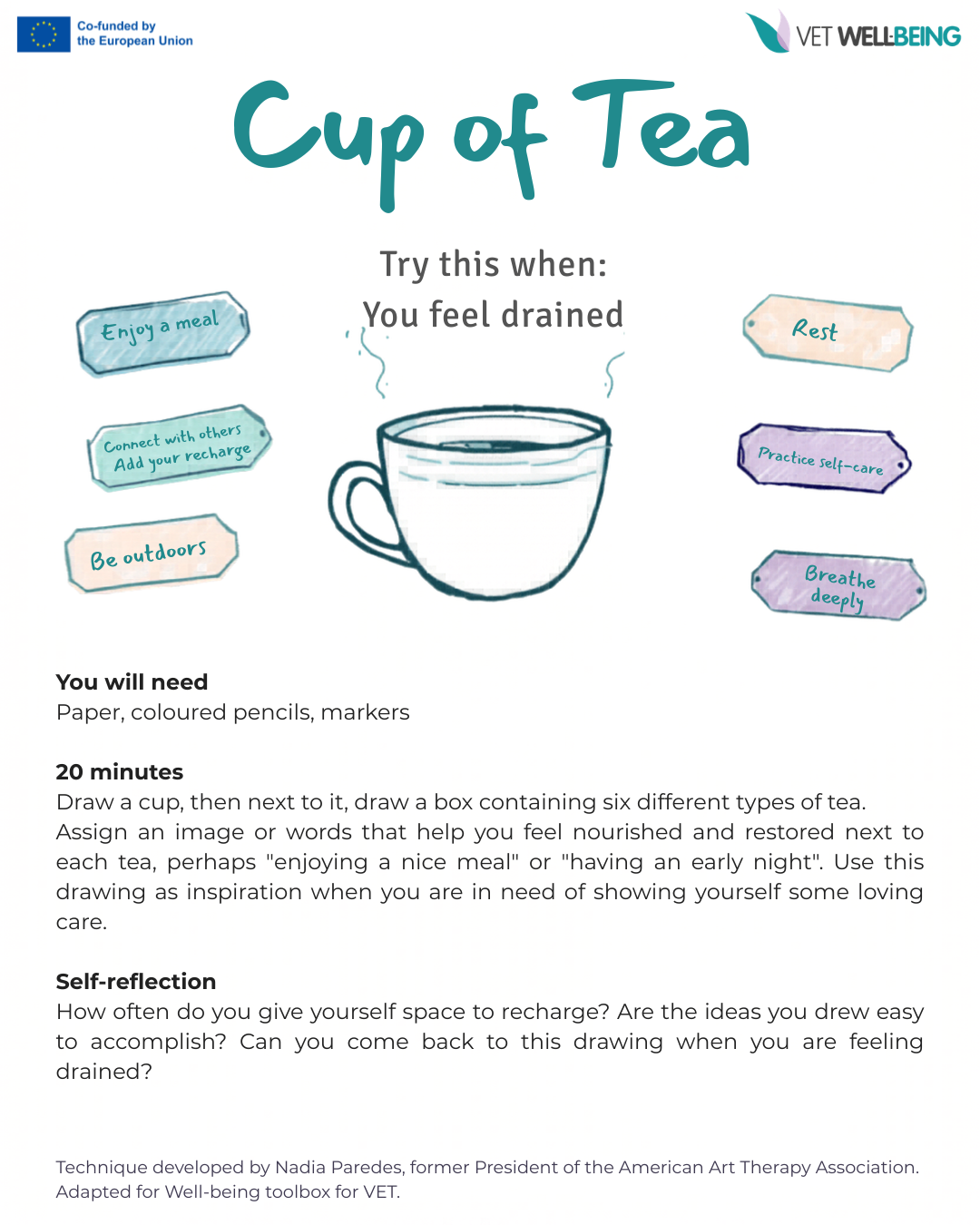
Cup of Tea — printable activity card
Art-therapy exercise for when you feel drained — draw a cup and six teas representing things that nourish you.
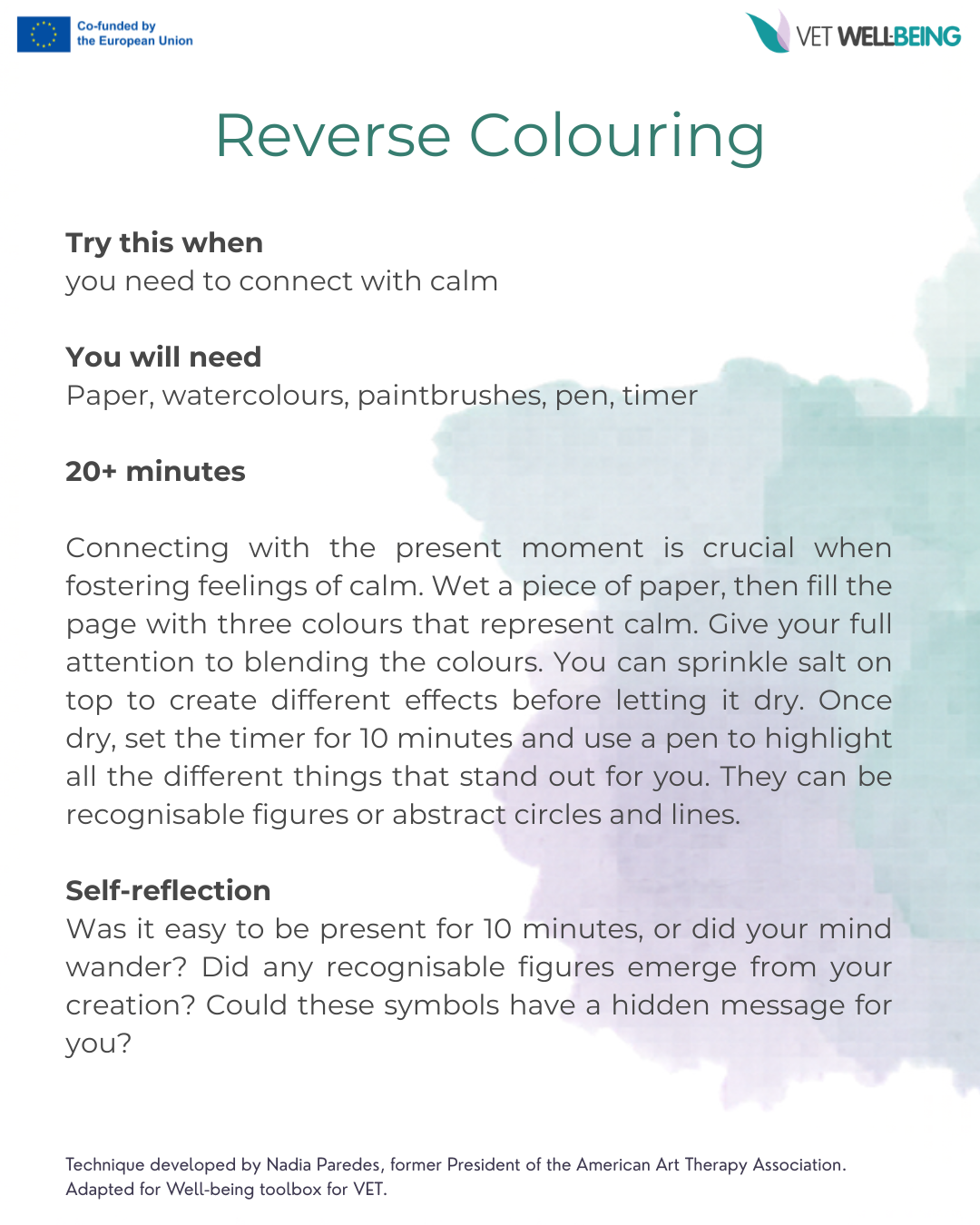
Reverse Colouring — printable activity card
Watercolour and pen exercise for connecting with calm and the present moment.
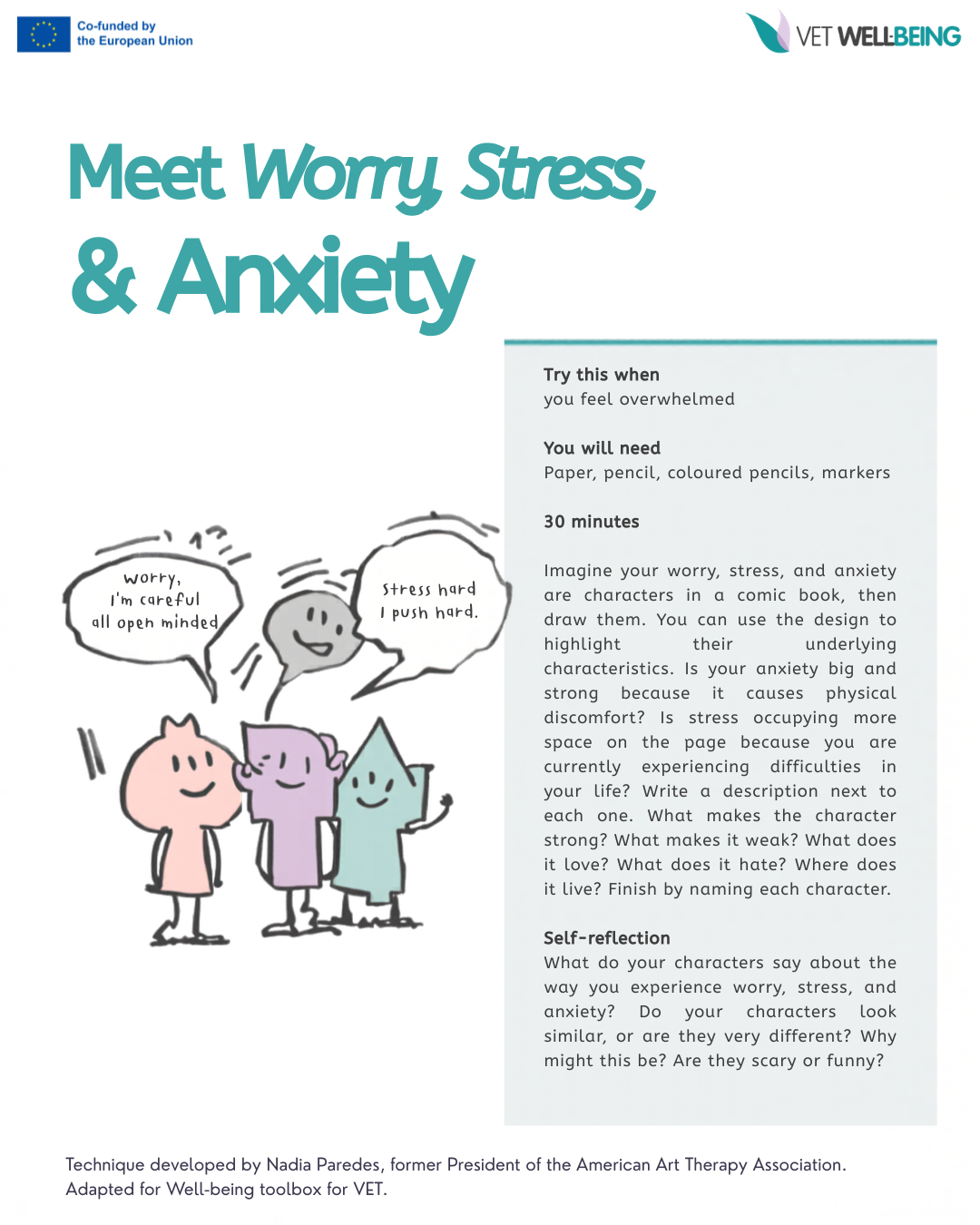
Meet Worry, Stress & Anxiety — printable activity card
Draw your worry, stress and anxiety as comic-book characters to externalise overwhelm.
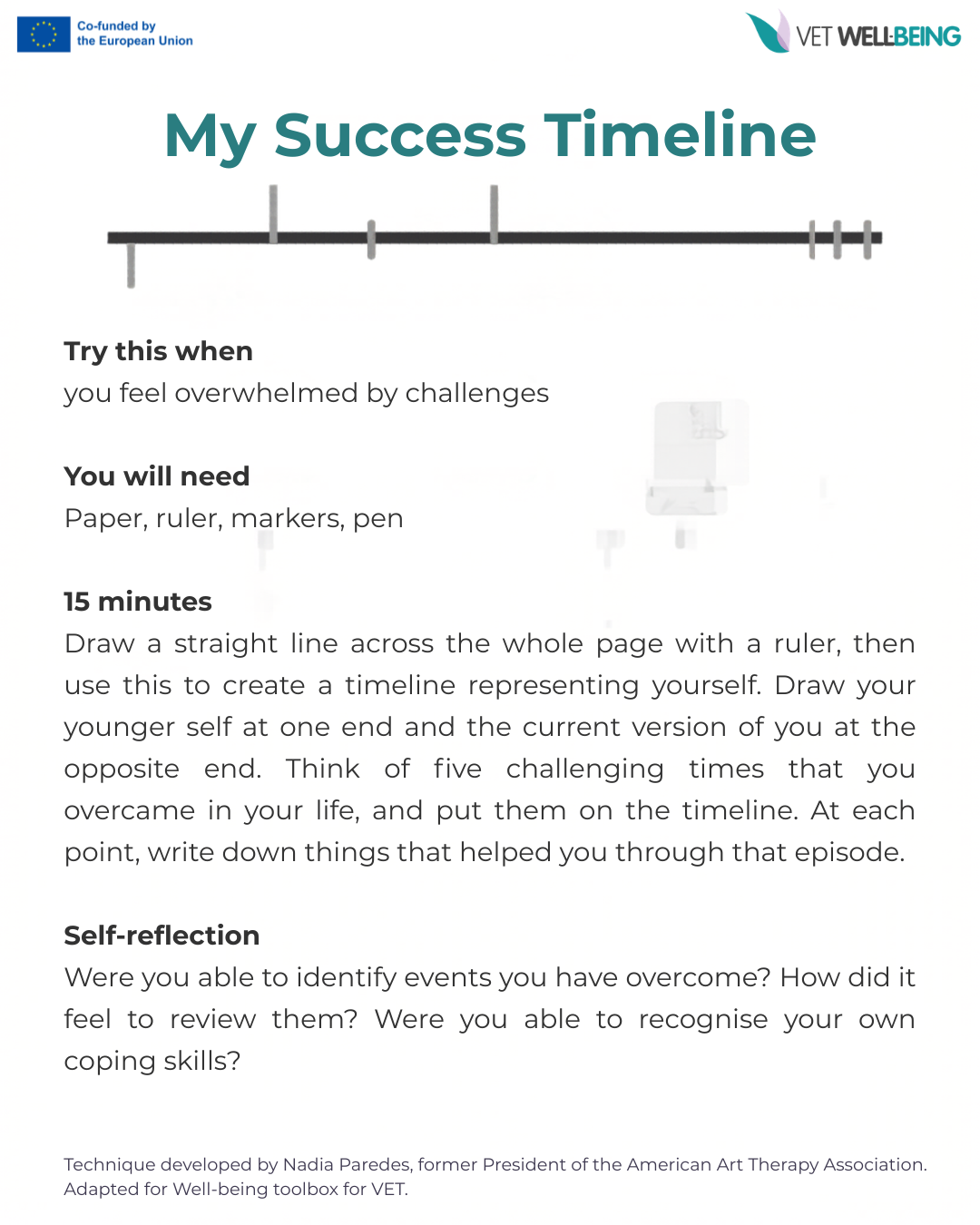
My Success Timeline — printable activity card
Map five challenges you have overcome and the coping skills that helped you through.
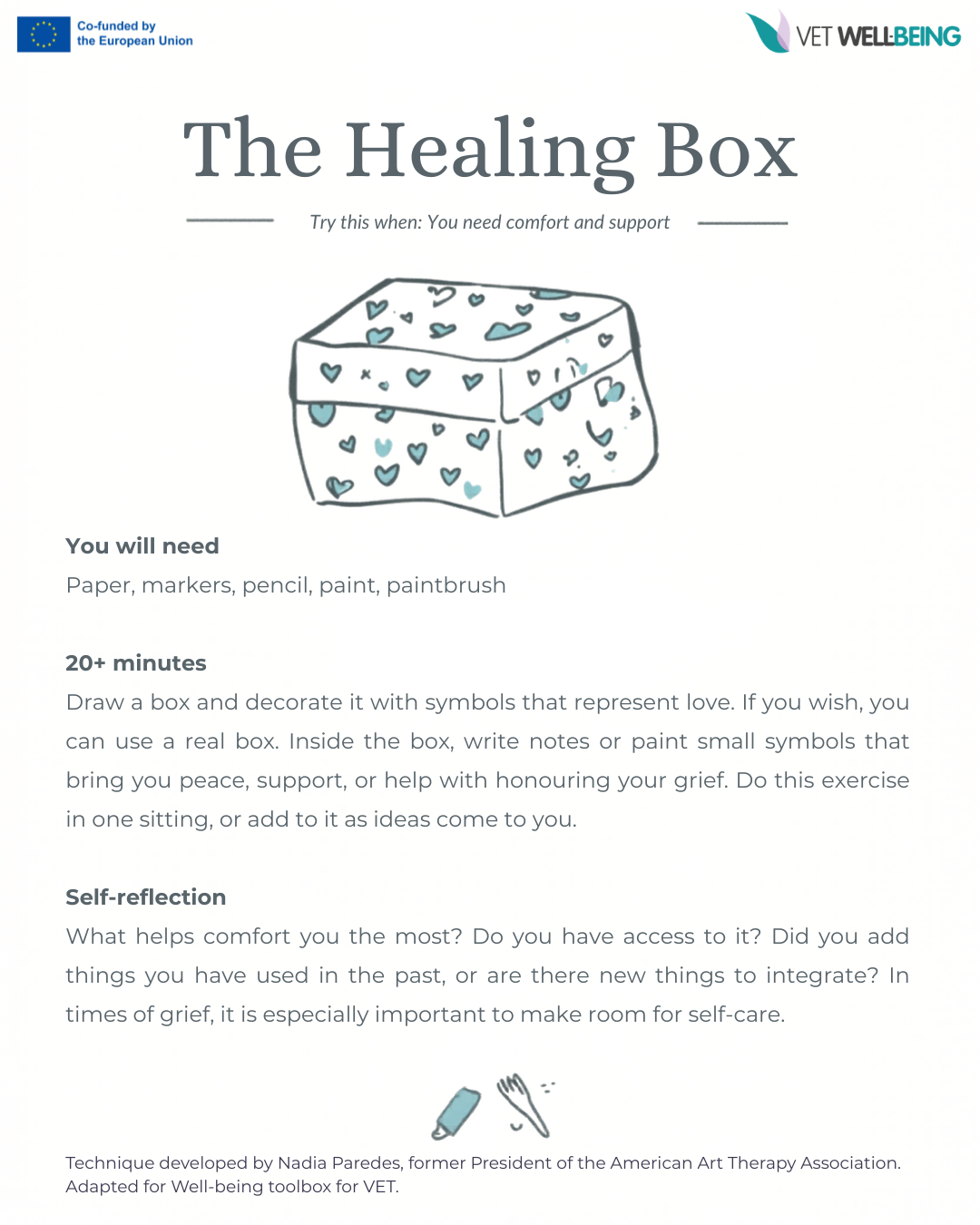
The Healing Box — printable activity card
Create a symbolic box of comfort and support for moments of grief or overwhelm.
Nature's Blueprint — printable activity card
Use the repetitive rhythm of drawing natural patterns to regulate emotions and calm the mind.
Tap the Stress Away — printable activity card
Finger-paint with a tapping movement to release accumulated stress through the body.
Soothing Spirals — printable activity card
Slow spiral drawing paired with calming phrases to settle the nervous system.
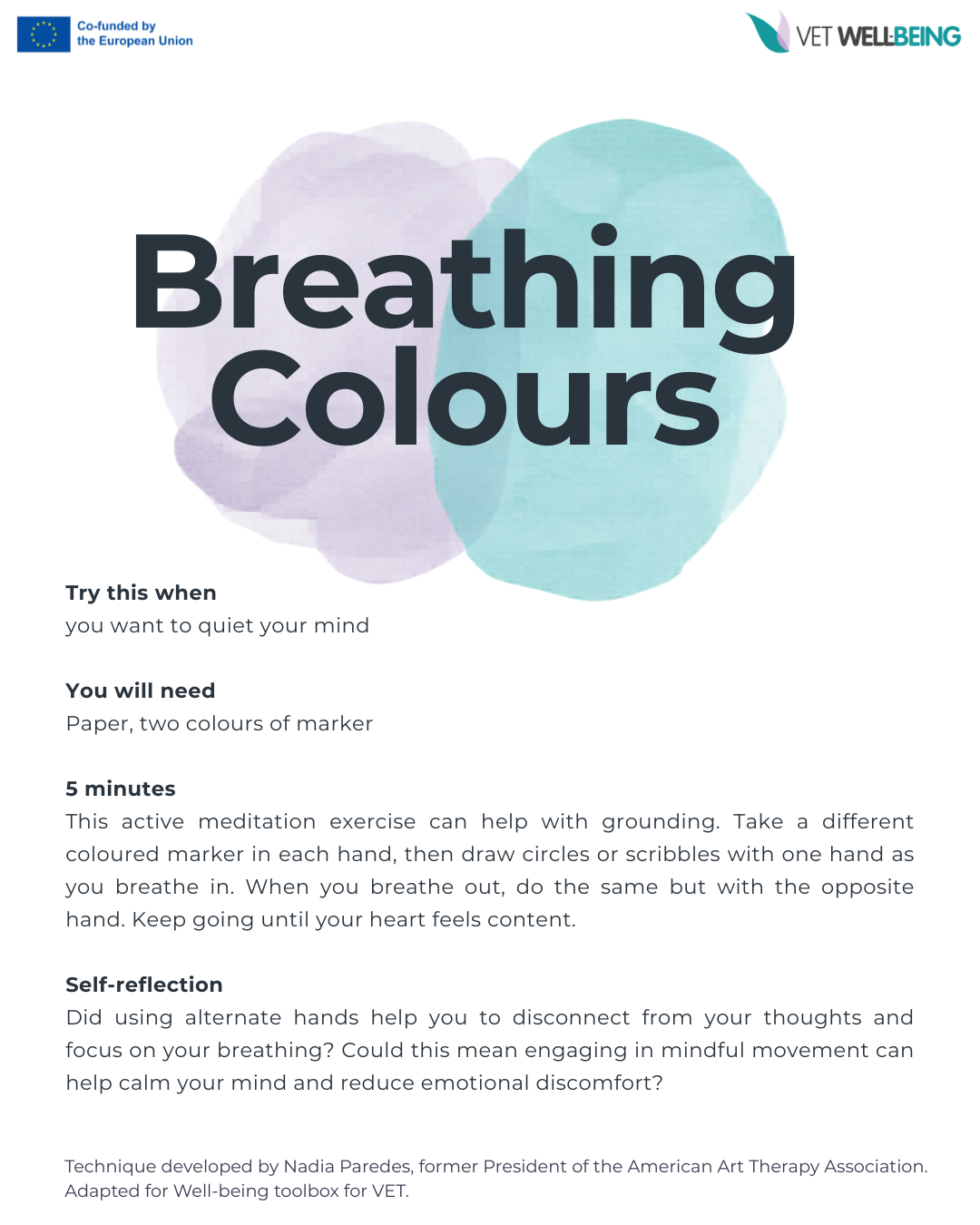
Breathing Colours — printable activity card
A 5-minute grounding meditation using two markers and your breath.
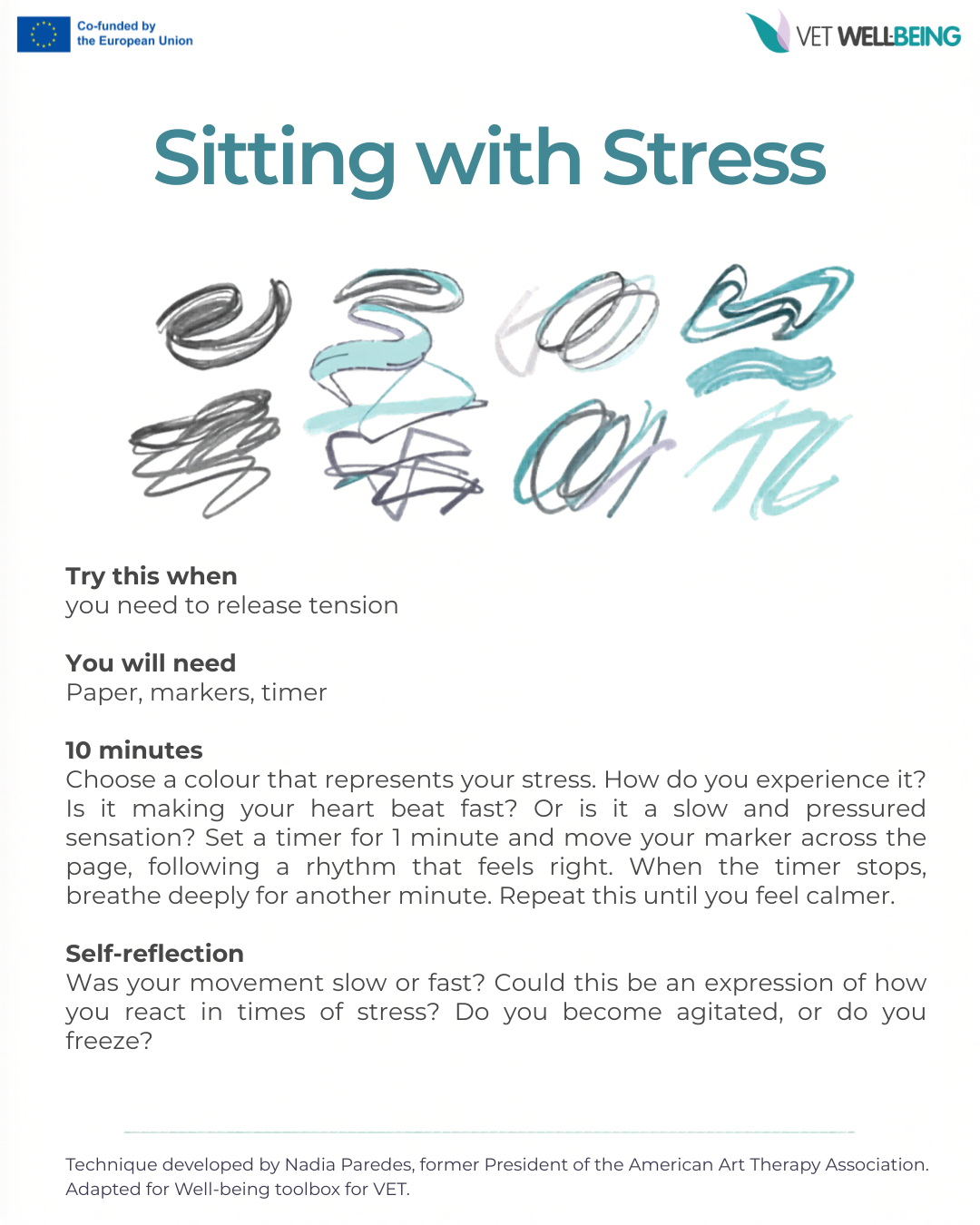
Sitting with Stress — printable activity card
Move a marker across the page in 1-minute rhythms paired with deep breathing to release tension.
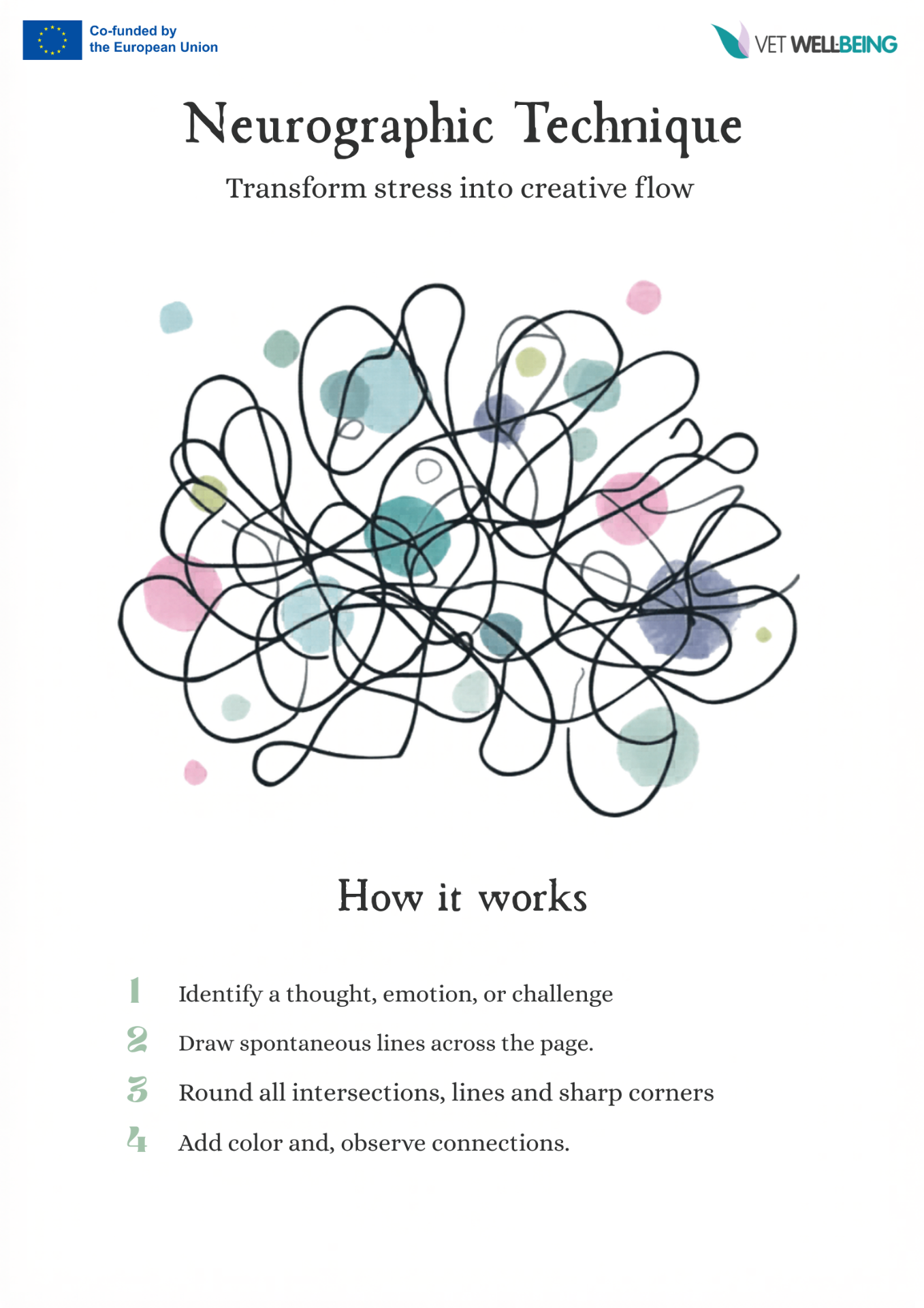
Neurographic Technique — printable activity card
Transform stress into creative flow — draw spontaneous lines, round the intersections, and add colour to observe new connections.
Stress signals — quick reference card
One-page sheet with somatic, cognitive and behavioural signs.
Worksheet
Grounding exercises worksheet
Guide
Trauma-aware classroom guide
Case Study
Case study: managing exam-week overload
Guide
Din Psykiska Hälsa — När livet känns jobbigt: stress
Swedish-language articles on recognising stress, managing pressure and seeking support when life feels difficult.
Guide
Transkulturellt Centrum — Kunskap om migration och psykisk hälsa
Centre for transcultural psychiatry offering knowledge, training and resources on mental health for migrants and professionals.
Guide
1177 Vårdguiden — Vad kan jag göra för att minska stress?
Sweden's national health guide with practical, evidence-based advice on reducing stress and improving sleep.
Calming clips
Useful links by country
Suggest a resource from your country
Know a useful service, hotline, article or organisation from your country that fits this topic? Share it and we'll review it for inclusion.
* required
Send suggestionNext section
02 — Low Mood and Signs of Depression